
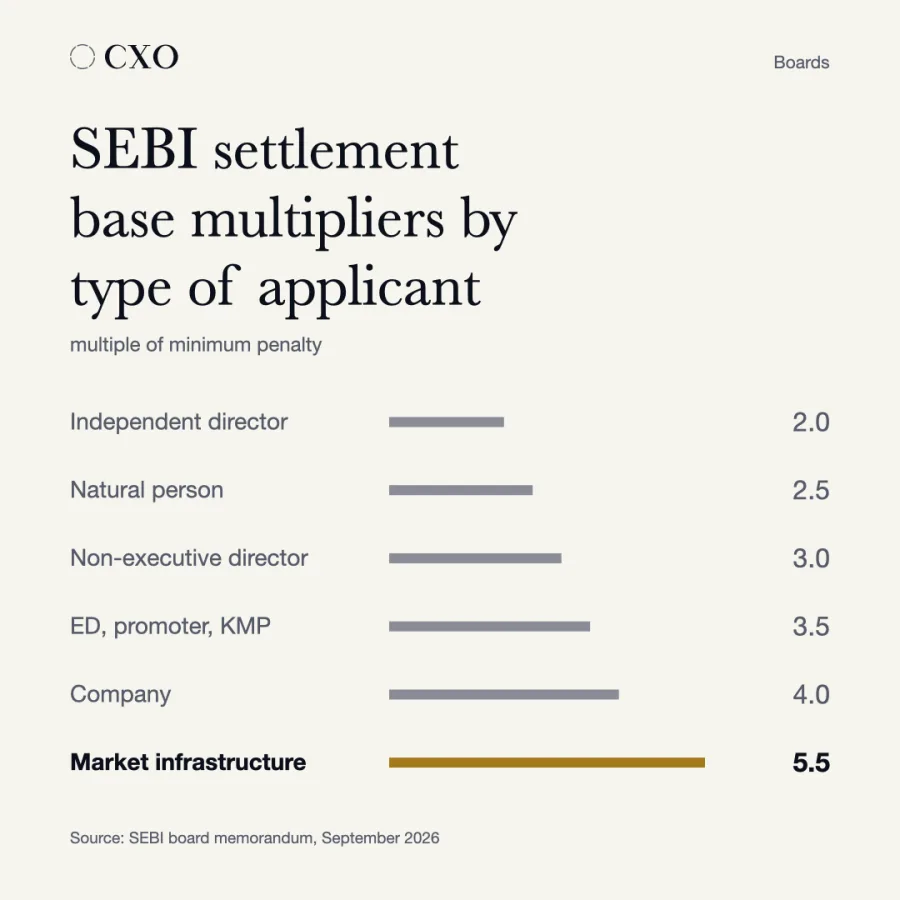
An independent director whose pending SEBI matter was never put up for settlement, or whose application was rejected, returned or withdrawn under the 2018 rules, has until 4 February 2027 to decide whether to settle through the one-time 90-day window or to contest. The window comes from regulation 4(3) of SEBI's Settlement Regulations 2026, in force since 7 November, and the date from SEBI's November FAQ. It covers only proceedings still pending before the Board, and regulation 4(4) adds 20% to the settlement amount. The new formula prices independent directors lowest, and regulation 11(2)(v) withdraws that price where fraud is alleged against the director.
Regulation 11(1), like SEBI's September board memorandum, sets the base amount as a multiple of the minimum penalty: 2 for independent directors, 3 for non-executive directors and 3.5 for executive directors, promoters in control and key managerial persons, against 4 for bodies corporate. Under regulation 11(2)(v), an independent director's base is "taken at par with executive director" where the report or show cause notice alleges the director benefited from the fraud or actively took part in it.
The memorandum explains the change: in a study of applications filed over the last two years where settlement failed and a penalty followed, settlement amounts proposed and not accepted were on average 8 times higher than the penalty finally imposed, with outliers left out.
The press release also adds a settlement notice before any show cause notice, giving 60 days to apply, except where prosecution or an interim order is contemplated (regulation 5), so a director facing the gravest allegations gets no pre-notice offer.
A SAT ruling this year weakens a familiar defence. On 15 June, in Sanjay Dwivedi and Anr v SEBI, reported by LiveLaw, SAT rejected a director's argument that responsibility lay with another director, citing section 166 of the Companies Act, though it cut his penalty from Rs 15 lakh to Rs 8 lakh.
The SEC's Enforcement Manual of 24 February 2026 tells staff to inform Wells recipients of "the salient, probative evidence" and, case by case, to let them review relevant parts of the file. Neither SEBI's release nor the 2026 Regulations provide for access to evidence, and a director cannot price a settlement against a case they have not seen.
After 4 February, the next route the regulations state is at appeal: regulation 4(2) lifts the time limit while a matter is pending before SAT or the Supreme Court.
We would ask SEBI in writing for the key evidence now and set the formula price, with its 20% loading, against the realistic penalty after contest plus the legal cost of getting there. Under the old formula contested penalties landed far below the rejected offers, SEBI's study found, and the new price for a narrow allegation at a multiplier of 2 may still be worth paying. The comparison assumes no prosecution risk.
This is based on our research into public sources and is not legal advice. Check how it applies to your company with your lawyers and advisers.
Sources (8)
- SEBI, Board memorandum, Settlement Regulations review (Sep 2026)
- SEBI, Press Release on Board Meeting (24 Sep 2026)
- SEBI, FAQs on Settlement Regulations 2026 (Nov 2026), window to 4 Feb 2027
- Maheshwari & Co., SEBI Settlement Regulations 2026 (Oct 2026)
- LiveLaw, Sanjay and Anr v SEBI, Appeal No. 711 of 2024 (17 Jun 2026)
- Gibson Dunn, SEC Division of Enforcement Updates Its Enforcement Manual (25 Feb 2026)
- SEBI (Settlement of Administrative and Civil Proceedings) Regulations 2026, gazetted 7 Oct 2026, in force 7 Nov 2026 (regs 4, 5, 11, 16)
- SEC Division of Enforcement, Enforcement Manual (24 Feb 2026)