
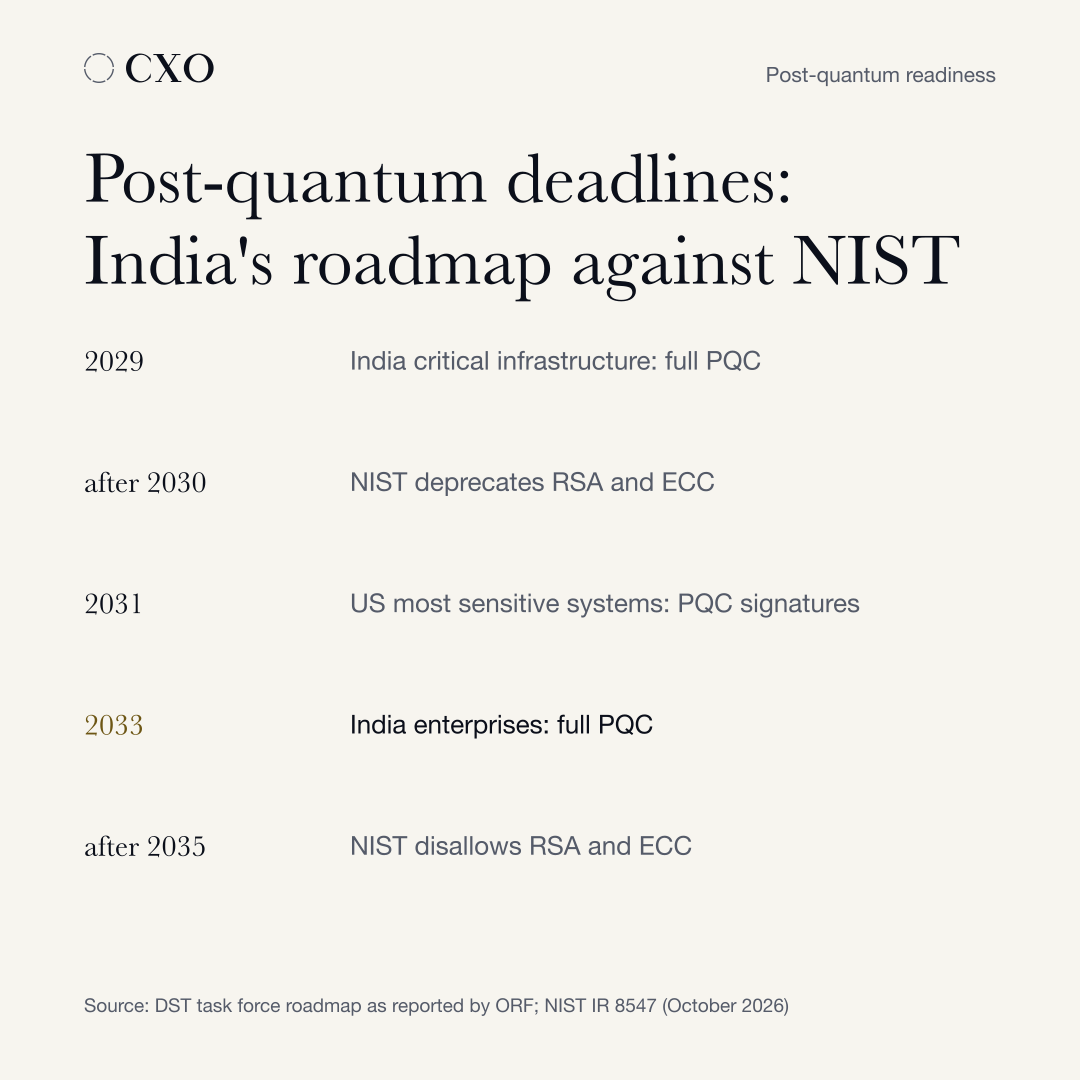
A CISO planning for post-quantum cryptography has to decide what goes into the cryptographic inventory first and which supplier contracts to reopen. The fact that drives it is India's quantum-safe roadmap. The task force report published by the Department of Science and Technology in February 2026, as reported by the Observer Research Foundation, sets three milestones for critical information infrastructure by 2027, 2028 and 2029, and for other enterprises by 2028, 2030 and 2033.
The first milestone asks organisations to inventory cryptographic assets, assess quantum risk and introduce PQC readiness requirements in procurement. The second enforces "no new classical-only deployments" and asks for supplier accountability and continuous monitoring. Vendors must submit cryptographic bills of materials, or CBOMs, from FY 2027-28. PostQuantum.com reports that the final version, published on 15 May 2026 as Quantum-Safe Ecosystem in India: Roadmap to Quantum Resiliency, kept these timelines, and that it was briefly posted and then removed pending republication. We could not open the DST PDF, which returned an error when we checked.
The international dates are now fixed. NIST published the final IR 8547 on 27 October 2026. It will deprecate quantum-vulnerable public-key cryptography after 2030 and disallow its use under NIST standards and guidelines after 2035. The US government's most sensitive systems must move earlier: post-quantum key establishment by 31 December 2030 and digital signatures by 31 December 2031. NIST's reason is the harvest now, decrypt later threat, and it advises starting with cryptographic inventories and migration planning. The ORF author argues that India's 2033 enterprise date is too aggressive against the 2035 target most other countries have chosen.
The inventory format already exists. CERT-In's technical guidelines of 9 July 2025 cover QBOM and CBOM alongside software, AI and hardware bills of materials, as reported by AZB & Partners. The firm describes them as voluntary for now and expects government departments may make bills of materials mandatory in procurement.
That sets the order of work. Inventory first the systems that protect data with a long confidentiality life, which NIST says warrant the earliest transitions, then the key exchange on internet-facing links. Then check whether each supplier contract obliges the vendor to deliver a CBOM and a PQC upgrade path, because FY 2027-28 falls inside the term of a three-year contract signed this year.
Our judgment is that RBI and SEBI will apply the roadmap's critical infrastructure dates to the entities they regulate, so a bank or market intermediary should plan to the 2027 to 2029 schedule and treat 2033 as a ceiling. We are wrong if no Indian financial regulator has issued a post-quantum migration requirement or deadline by 31 December 2027.
This is based on our research into public sources and is not legal advice. Check how it applies to your company with your lawyers and advisers.
Sources (5)
- Observer Research Foundation, Prateek Tripathi, India's post-quantum cryptography migration roadmap (23 March 2026)
- PostQuantum.com, India's final quantum-safe roadmap (May 2026)
- NIST IR 8547, Transition to Post-Quantum Cryptography Standards (final, October 2026)
- NIST CSRC, IR 8547 (Final) publication page
- AZB & Partners, CERT-In's new BOM guidelines: what India's software, AI and hardware ecosystem needs to know (29 July 2025)