
An investor from your own region may pay more for your company and take more protection in the same document. A study of 622 Indian VC deals by Balagopal Vissa and Kim Claes, summarised by INSEAD in 2019, found higher pre-money valuations for regionally similar founders and stron
An investor from your own region may pay more for your company and take more protection in the same document. A study of 622 Indian VC deals by Balagopal Vissa and Kim Claes, summarised by INSEAD in 2019, found higher pre-money valuations for regionally similar founders and stronger downside protection on those deals, including liquidation preferences and anti-dilution rights. INSEAD's summary gives no percentage for the premium. Greater similarity also went with higher VC returns, which fits the protection working in the fund's favour, though the study shows correlation only.
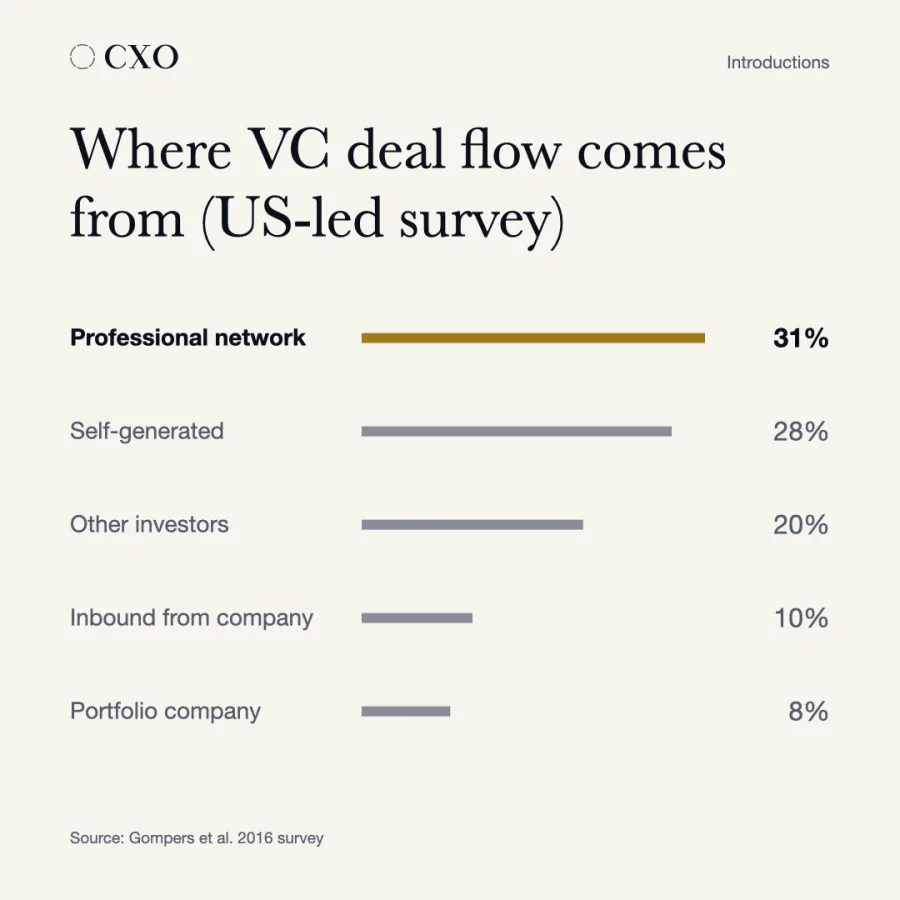
More than half of deals still reach a fund through someone the investor knows. Gompers, Gornall, Kaplan and Strebulaev surveyed 889 respondents at 681 VC firms in work dated 2016. Over 30% of deals came through professional networks, 20% through other investors, 8% through portfolio companies and almost 30% from VCs approaching companies themselves, against only 10% inbound from company management. Answers are self-reported and the frame covered most active US VCs plus many from elsewhere, so this is mainly a US funnel. The 30% the funds find for themselves means being easy to find counts as well.
The Indian study measured similarity between founder and investor and did not measure introductions. Connecting it to the person who introduces you is our inference, and we would act on it because the check is cheap.
As you write the 2027 investor list, mark beside each fund how much regional background its lead partner shares with you, and how close your introducer is to that partner. A strong price from a partner who shares your background gets modelled at a weak exit, with its liquidation preference and anti-dilution terms, before anyone says yes.